

You are here : EMDM-ROMSTENPartnersBusiness and Technology University, Georgia
- Updated on February 20, 2026
- PDF version
Business and Technology University, Georgia
Here’s a historical and descriptive presentation of the Business and Technology University (BTU) in Georgia written in the same style and tone as your University of Alcalá example:
Although higher education in Georgia has deep historical roots, the Business and Technology University (BTU) was founded on September 16, 2016 as a completely new educational project with a mission to blend business education, modern digital technologies, innovation, and research into a unified academic ecosystem. Established in Tbilisi — the capital and economic heart of Georgia — BTU emerged as part of forward-looking efforts to modernize higher education in the country and align it with global trends in the digital economy. From its earliest conception, the founders envisioned BTU as a dynamic institution that would nurture entrepreneurial mindsets, cultivate technological leadership, and prepare graduates not only for the local market but also for international challenges and opportunities.

In its first years of operation, the Business and Technology University rapidly distinguished itself through its innovative approach to teaching and learning. Unlike traditional universities focused solely on theory, BTU integrated practical experience, research, and real-world application into its curricula. Its academic programs span all three levels of higher education — bachelor’s, master’s, and doctoral studies — in fields such as business administration, information technologies, computer science, digital marketing, artificial intelligence, and cybersecurity. This multidisciplinary portfolio reflects BTU’s core belief that the future workforce must be fluent in both entrepreneurial thinking and technological literacy.
From the outset, the University’s identity was shaped by its commitment to innovation and societal impact. BTU became Georgia’s first private high-technology academic hub combining classrooms with specialized labs — including AI Labs, Industry 4.0, Blockchain, Renewable Energy, Cybersecurity, Microsoft technologies, and Mobile Development labs — and research centers dedicated to applied science and digital transformation. These facilities foster a culture of experimentation and discovery, encouraging students to participate in projects that bridge academic knowledge with industry needs.
As BTU grew, it also became a regional focal point for innovation ecosystems. The University established an Entrepreneurship Center, startup incubators, and accelerator programs aimed at helping students and young professionals transform ideas into market-ready ventures. By nurturing connections between academia, industry, and the public sector, BTU played a catalytic role in strengthening Georgia’s emerging digital economy and entrepreneurial landscape.
Throughout the late 2010s and early 2020s, BTU’s influence expanded nationally and internationally. It launched specialized initiatives and award-winning programs — including coding schools for women and digital leadership trainings — that contributed to greater inclusivity in tech education and leveraged global partnerships to broaden opportunities for its community. The University collaborated with international institutions, participated in student and faculty exchanges, and engaged in research networks that reinforced its integration into the global academic sphere.
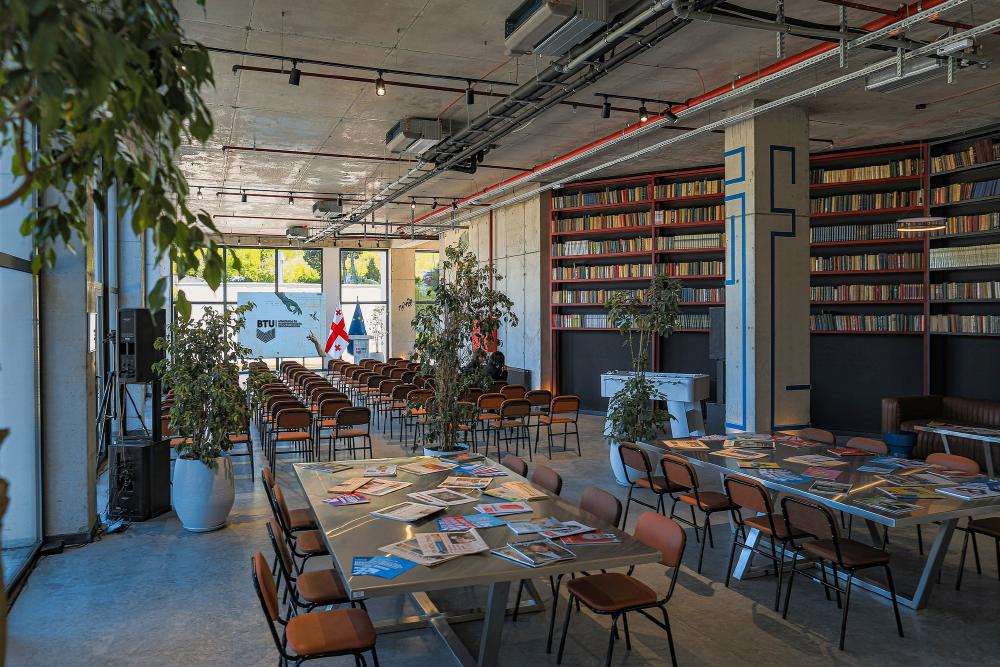
Today, the Business and Technology University stands as one of Georgia’s most innovative and in-demand higher education institutions. With thousands of students enrolled, a diverse academic staff, and a portfolio of more than a dozen accredited programs, BTU continues to evolve. Its impact is evident in the success of its graduates, the quality of its research output, and its role in shaping digital and entrepreneurial talent in Georgia and beyond. The University’s modern infrastructures — including recently expanded campuses equipped with cutting-edge technology — are a testament to its sustained growth and forward-thinking ambitions.
BTU’s mission remains rooted in its foundational vision: to educate leaders who are equipped for the complexities of the digital age, to foster innovation that generates social and economic value, and to build bridges between education, technology, and business on a global scale. As a result, BTU is not merely an academic institution but a transformative force in Georgia’s higher education landscape and a model for future-oriented universities worldwide.
Although higher education in Georgia has deep historical roots, the Business and Technology University (BTU) was founded on September 16, 2016 as a completely new educational project with a mission to blend business education, modern digital technologies, innovation, and research into a unified academic ecosystem. Established in Tbilisi — the capital and economic heart of Georgia — BTU emerged as part of forward-looking efforts to modernize higher education in the country and align it with global trends in the digital economy. From its earliest conception, the founders envisioned BTU as a dynamic institution that would nurture entrepreneurial mindsets, cultivate technological leadership, and prepare graduates not only for the local market but also for international challenges and opportunities.
In its first years of operation, the Business and Technology University rapidly distinguished itself through its innovative approach to teaching and learning. Unlike traditional universities focused solely on theory, BTU integrated practical experience, research, and real-world application into its curricula. Its academic programs span all three levels of higher education — bachelor’s, master’s, and doctoral studies — in fields such as business administration, information technologies, computer science, digital marketing, artificial intelligence, and cybersecurity. This multidisciplinary portfolio reflects BTU’s core belief that the future workforce must be fluent in both entrepreneurial thinking and technological literacy.
From the outset, the University’s identity was shaped by its commitment to innovation and societal impact. BTU became Georgia’s first private high-technology academic hub combining classrooms with specialized labs — including AI Labs, Industry 4.0, Blockchain, Renewable Energy, Cybersecurity, Microsoft technologies, and Mobile Development labs — and research centers dedicated to applied science and digital transformation. These facilities foster a culture of experimentation and discovery, encouraging students to participate in projects that bridge academic knowledge with industry needs.
As BTU grew, it also became a regional focal point for innovation ecosystems. The University established an Entrepreneurship Center, startup incubators, and accelerator programs aimed at helping students and young professionals transform ideas into market-ready ventures. By nurturing connections between academia, industry, and the public sector, BTU played a catalytic role in strengthening Georgia’s emerging digital economy and entrepreneurial landscape.
Throughout the late 2010s and early 2020s, BTU’s influence expanded nationally and internationally. It launched specialized initiatives and award-winning programs — including coding schools for women and digital leadership trainings — that contributed to greater inclusivity in tech education and leveraged global partnerships to broaden opportunities for its community. The University collaborated with international institutions, participated in student and faculty exchanges, and engaged in research networks that reinforced its integration into the global academic sphere.
Today, the Business and Technology University stands as one of Georgia’s most innovative and in-demand higher education institutions. With thousands of students enrolled, a diverse academic staff, and a portfolio of more than a dozen accredited programs, BTU continues to evolve. Its impact is evident in the success of its graduates, the quality of its research output, and its role in shaping digital and entrepreneurial talent in Georgia and beyond. The University’s modern infrastructures — including recently expanded campuses equipped with cutting-edge technology — are a testament to its sustained growth and forward-thinking ambitions.
BTU’s mission remains rooted in its foundational vision: to educate leaders who are equipped for the complexities of the digital age, to foster innovation that generates social and economic value, and to build bridges between education, technology, and business on a global scale. As a result, BTU is not merely an academic institution but a transformative force in Georgia’s higher education landscape and a model for future-oriented universities worldwide.