
You are here : EMDM-ROMSTENPartnersPolytechnic Institute of Braganca
- Updated on February 20, 2026
- PDF version
Polytechnic Institute of Braganca
Although the northeastern region of Portugal had educational initiatives and a growing demand for professional training in the later decades of the 20th century, the Polytechnic Institute of Bragança (Instituto Politécnico de Bragança, IPB) was officially established on 28 January 1983 as part of the Portuguese government’s effort to expand and democratize access to higher education across the country. From the outset, IPB was conceived not as a traditional university but as a polytechnic institution dedicated to creating, transmitting, and disseminating technical-scientific and professional knowledge through the integration of study, teaching, applied research, and experimental development. Its establishment responded to a clear regional need: to strengthen the local economy and society by fostering skills, innovation, and knowledge transfer that would benefit both the community and the nation.
In its early years, IPB set about structuring a diverse and practical academic offer tailored to contemporary professional demands. Organized into five schools — including the School of Agriculture (Escola Superior Agrária), School of Education, School of Technology and Management, School of Health, and School of Public Management, Communication and Tourism — it embraced a multidisciplinary approach that combined agricultural sciences, engineering and technologies, business and communication, education, health sciences, and other key fields. The Institute’s mission was rooted in the conviction that higher education should be closely linked to societal needs and regional development, providing students not only with academic knowledge but with the skills necessary for immediate professional engagement and lifelong learning.
Throughout the late 20th century and into the early 21st century, the Institute expanded both in scope and impact. It aligned its programs with the European Higher Education Area and the Bologna Process, adopting the European Credit Transfer and Accumulation System (ECTS) and steadily increasing the quality and breadth of its academic offer. Today, IPB offers more than one hundred courses across professional and academic cycles — from technological specializations and bachelor’s degrees to master’s programs — reflecting its commitment to adaptability and relevance in a rapidly changing global landscape.
A defining feature of the Polytechnic Institute of Bragança has been its internationalization and mobility initiatives. Over the last decade, IPB has become one of the most active institutions in Portugal in terms of student and staff mobility, with thousands participating annually in exchange programs, including Erasmus and international cooperation projects. This dynamic engagement has transformed the institution’s image nationally and internationally, enhancing opportunities for intercultural exchange and positioning IPB as a meeting point for diverse academic communities.
Today, the IPB is a multicultural and forward-looking institution, serving around 8,000 students, of whom a significant percentage come from abroad. It is recognized for performance in applied research, regional engagement, and innovation, firmly rooted in its commitment to sustainability and economic development. The Institute plays a pivotal role in driving territorial cohesion and cross-border cooperation, leveraging its academic and research capabilities to support both the local region of Trás-os-Montes and the broader Portuguese and international context.

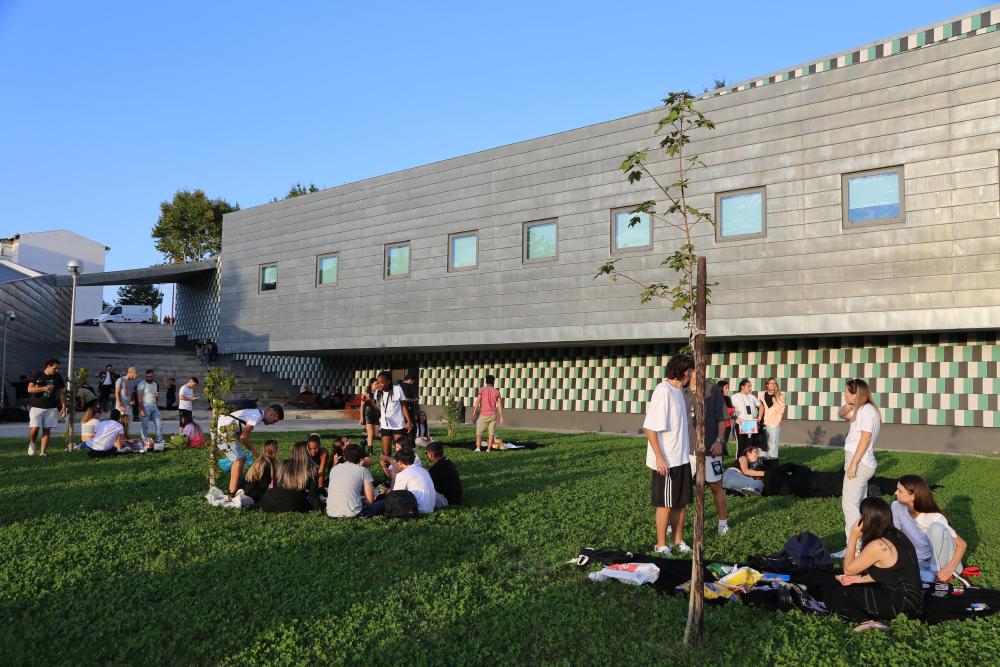
The campuses in Bragança and Mirandela are not merely academic centers but vibrant parts of the social and cultural fabric of their cities, offering students a rich environment that blends educational excellence with historical, environmental, and cultural richness. The surrounding landscape — from natural parks to UNESCO World Heritage regions — complements the learning experience, making study at IPB both academically rewarding and personally enriching.
As IPB continues to evolve, its guiding principles remain clear: to provide inclusive access to higher education, enhance employability through relevant and applied teaching, foster innovation through research, and cultivate international cooperation and mobility. These commitments ensure that the Polytechnic Institute of Bragança remains at the forefront of polytechnic education, preparing graduates to succeed in an interconnected and rapidly changing world.
In its early years, IPB set about structuring a diverse and practical academic offer tailored to contemporary professional demands. Organized into five schools — including the School of Agriculture (Escola Superior Agrária), School of Education, School of Technology and Management, School of Health, and School of Public Management, Communication and Tourism — it embraced a multidisciplinary approach that combined agricultural sciences, engineering and technologies, business and communication, education, health sciences, and other key fields. The Institute’s mission was rooted in the conviction that higher education should be closely linked to societal needs and regional development, providing students not only with academic knowledge but with the skills necessary for immediate professional engagement and lifelong learning.
Throughout the late 20th century and into the early 21st century, the Institute expanded both in scope and impact. It aligned its programs with the European Higher Education Area and the Bologna Process, adopting the European Credit Transfer and Accumulation System (ECTS) and steadily increasing the quality and breadth of its academic offer. Today, IPB offers more than one hundred courses across professional and academic cycles — from technological specializations and bachelor’s degrees to master’s programs — reflecting its commitment to adaptability and relevance in a rapidly changing global landscape.
A defining feature of the Polytechnic Institute of Bragança has been its internationalization and mobility initiatives. Over the last decade, IPB has become one of the most active institutions in Portugal in terms of student and staff mobility, with thousands participating annually in exchange programs, including Erasmus and international cooperation projects. This dynamic engagement has transformed the institution’s image nationally and internationally, enhancing opportunities for intercultural exchange and positioning IPB as a meeting point for diverse academic communities.
Today, the IPB is a multicultural and forward-looking institution, serving around 8,000 students, of whom a significant percentage come from abroad. It is recognized for performance in applied research, regional engagement, and innovation, firmly rooted in its commitment to sustainability and economic development. The Institute plays a pivotal role in driving territorial cohesion and cross-border cooperation, leveraging its academic and research capabilities to support both the local region of Trás-os-Montes and the broader Portuguese and international context.
The campuses in Bragança and Mirandela are not merely academic centers but vibrant parts of the social and cultural fabric of their cities, offering students a rich environment that blends educational excellence with historical, environmental, and cultural richness. The surrounding landscape — from natural parks to UNESCO World Heritage regions — complements the learning experience, making study at IPB both academically rewarding and personally enriching.
As IPB continues to evolve, its guiding principles remain clear: to provide inclusive access to higher education, enhance employability through relevant and applied teaching, foster innovation through research, and cultivate international cooperation and mobility. These commitments ensure that the Polytechnic Institute of Bragança remains at the forefront of polytechnic education, preparing graduates to succeed in an interconnected and rapidly changing world.