
You are here : EMDM-ROMSTENPartnersUniversity of Sofia
- Updated on February 20, 2026
- PDF version
University of Sofia
Although Bulgaria had a long tradition of public teaching dating back to the Second Bulgarian Empire and the medieval schools of the 9th century, the modern era of higher education in the country truly began with the establishment of Sofia University “St. Kliment Ohridski” on 1 October 1888. Founded shortly after Bulgaria’s liberation from Ottoman rule, the institution was initially conceived as a Higher Pedagogical Course to train teachers for the newly autonomous Bulgarian state. Its creation was a decisive step in translating the aspirations of Bulgarian cultural revival into modern academic structures, and it soon became the leading force in the development of national scholarly life.
In its first year, the institution opened with a modest roster of four regular lecturers, three additional teachers, and 49 students, offering instruction in pedagogy, history, literature, and mathematics. Within a few years, it expanded its academic scope, adding faculties in physics and mathematics (1889) and law (1892), and in 1904 it was officially transformed into a full university, taking the name Sofia University “St. Kliment Ohridski” in honour of the medieval scholar and teacher St. Kliment of Ohrid — one of the earliest figures in Slavic literacy and education.
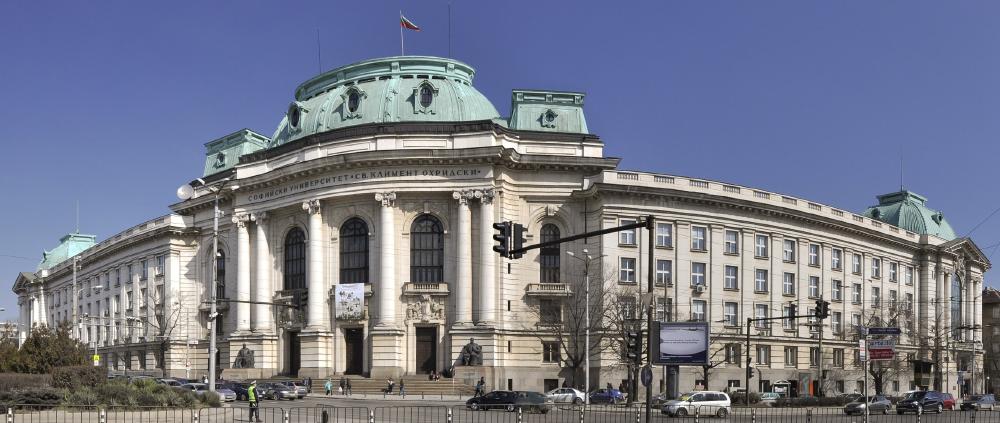
During the early decades of the 20th century, Sofia University rapidly became the intellectual and cultural heart of Bulgaria. Its alumni and faculty included prominent writers, politicians, scientists, and cultural figures who shaped the nation’s intellectual landscape. The construction of the university’s iconic main building in the heart of Sofia, completed in 1934 with generous support from Bulgarian philanthropists Evlogi and Hristo Georgiev, symbolized its central role in national life. The statues of the Georgiev brothers still greet students and visitors at the grand façade.
In the years that followed, the institution continued to evolve, adding faculties in medicine, agronomy, theology, and veterinary medicine by the 1920s. Throughout this period, Sofia University remained Bulgaria’s primary centre of academic scholarship, research, and education, nurturing generations of specialists in the humanities, sciences, law, and more.
Like many European universities, Sofia University faced profound challenges during the upheavals of the mid-20th century. The political transformations after 1944 brought changes in governance and curriculum under the socialist system, yet the university endured and adapted, maintaining its commitment to scholarly inquiry and academic training. After the fall of communism in the 1990s, it underwent further reforms, modernizing its programs, strengthening ties with international partners, and expanding its role in global academic networks.
Today, Sofia University is widely recognized as the largest and most prestigious higher education institution in Bulgaria, with more than 21,000 students, roughly 1,700 academic staff, and a comprehensive portfolio that spans 16 faculties and three departments across the natural sciences, social sciences, humanities, education, and professional fields. Its academic offerings include bachelor’s, master’s, and doctoral programs in disciplines ranging from biology and chemistry to economics, law, journalism, mathematics, and theology.
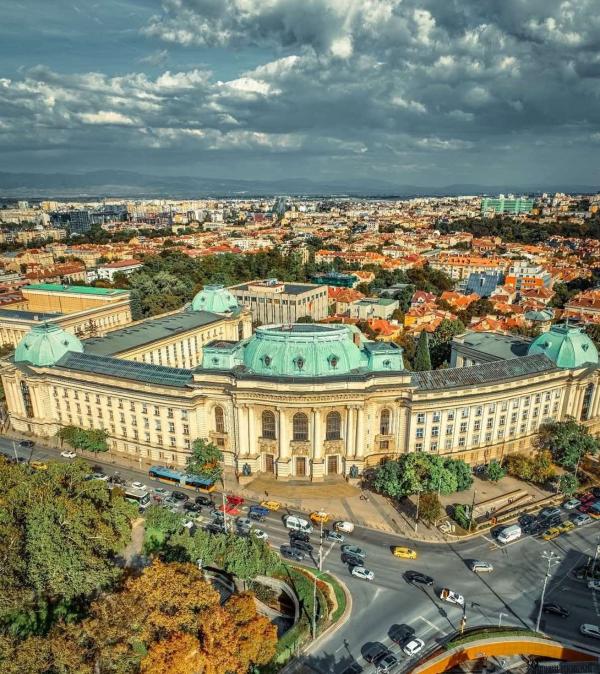
The University’s central campus remains anchored in Sofia’s historic core, yet its influence extends well beyond the city. It is a major research centre in the Balkans and Bulgaria’s intellectual capital, contributing to scientific discovery, cultural dialogue, and the shaping of public life. Its motto, Ipsa scientia potestas est — “Knowledge itself is power” — encapsulates a mission that has guided the institution from its modest beginnings to its current status as a hub of academic excellence.
Across its long history, Sofia University has been both a guardian of tradition and a driver of innovation, adapting to social changes, advancing research frontiers, and educating leaders in every field of Bulgarian life. Its graduates and scholarly community continue to influence society, culture, and science at national and international levels, ensuring that the university remains a cornerstone of learning and progress in the 21st century.
In its first year, the institution opened with a modest roster of four regular lecturers, three additional teachers, and 49 students, offering instruction in pedagogy, history, literature, and mathematics. Within a few years, it expanded its academic scope, adding faculties in physics and mathematics (1889) and law (1892), and in 1904 it was officially transformed into a full university, taking the name Sofia University “St. Kliment Ohridski” in honour of the medieval scholar and teacher St. Kliment of Ohrid — one of the earliest figures in Slavic literacy and education.
During the early decades of the 20th century, Sofia University rapidly became the intellectual and cultural heart of Bulgaria. Its alumni and faculty included prominent writers, politicians, scientists, and cultural figures who shaped the nation’s intellectual landscape. The construction of the university’s iconic main building in the heart of Sofia, completed in 1934 with generous support from Bulgarian philanthropists Evlogi and Hristo Georgiev, symbolized its central role in national life. The statues of the Georgiev brothers still greet students and visitors at the grand façade.
In the years that followed, the institution continued to evolve, adding faculties in medicine, agronomy, theology, and veterinary medicine by the 1920s. Throughout this period, Sofia University remained Bulgaria’s primary centre of academic scholarship, research, and education, nurturing generations of specialists in the humanities, sciences, law, and more.
Like many European universities, Sofia University faced profound challenges during the upheavals of the mid-20th century. The political transformations after 1944 brought changes in governance and curriculum under the socialist system, yet the university endured and adapted, maintaining its commitment to scholarly inquiry and academic training. After the fall of communism in the 1990s, it underwent further reforms, modernizing its programs, strengthening ties with international partners, and expanding its role in global academic networks.
Today, Sofia University is widely recognized as the largest and most prestigious higher education institution in Bulgaria, with more than 21,000 students, roughly 1,700 academic staff, and a comprehensive portfolio that spans 16 faculties and three departments across the natural sciences, social sciences, humanities, education, and professional fields. Its academic offerings include bachelor’s, master’s, and doctoral programs in disciplines ranging from biology and chemistry to economics, law, journalism, mathematics, and theology.
The University’s central campus remains anchored in Sofia’s historic core, yet its influence extends well beyond the city. It is a major research centre in the Balkans and Bulgaria’s intellectual capital, contributing to scientific discovery, cultural dialogue, and the shaping of public life. Its motto, Ipsa scientia potestas est — “Knowledge itself is power” — encapsulates a mission that has guided the institution from its modest beginnings to its current status as a hub of academic excellence.
Across its long history, Sofia University has been both a guardian of tradition and a driver of innovation, adapting to social changes, advancing research frontiers, and educating leaders in every field of Bulgarian life. Its graduates and scholarly community continue to influence society, culture, and science at national and international levels, ensuring that the university remains a cornerstone of learning and progress in the 21st century.